Buffalo, NY, is known for many things – chicken wings, passionate sports fans, and some of the most brutal winters in the United States. With lake-effect snow dumping feet of powder, temperatures plunging below zero, and freeze-thaw cycles that can wreak havoc on outdoor structures, choosing the right fence material is not just a matter of aesthetics – it is a matter of survival.
If you are planning a fence installation in Buffalo, NY, understanding how different materials handle our extreme weather is essential. The wrong choice could mean costly repairs, premature replacement, or a fence that looks worn out after just a few seasons.
At Quality Fencing, we have been installing fences in Western New York for over a decade. We have seen firsthand which materials thrive in our climate and which ones struggle. In this guide, we will share our expert insights to help you choose the best fence for Buffalo’s harsh winters.
Need a Winter-Tough Fence for Your Buffalo Property?
Get expert advice and a FREE estimate from Buffalo’s trusted fence professionals!
📞 Call Now: (716) 309-5471
👉 Schedule Your Free Consultation
Understanding Buffalo’s Unique Weather Challenges
Before we dive into specific materials, let us look at what makes Buffalo’s climate so demanding on fences:
Lake-Effect Snow
Buffalo averages over 95 inches of snow annually, with some years exceeding 120 inches. Lake-effect storms can dump 2-3 feet of heavy, wet snow in a single event. This snow accumulates against fences, creating pressure that can bow panels, break posts, and damage hardware.
Freeze-Thaw Cycles
Western New York experiences frequent temperature swings, often going from below freezing to above 40°F and back within days. This constant freezing and thawing causes the ground to heave, which can shift fence posts and loosen foundations. Materials that absorb moisture are particularly vulnerable, as water expands when it freezes.
High Winds
Buffalo is one of the windiest cities in the United States. Strong winds, especially during winter storms, put tremendous stress on solid fence panels. A fence that is not properly anchored or designed for wind resistance can be blown over or damaged.
Road Salt and Moisture
If your property is near a road, salt spray from winter plowing can accelerate corrosion on metal fences and degrade certain materials. Constant exposure to moisture from melting snow also promotes rot, rust, and mildew.
Best Fence Materials for Buffalo Winters: Ranked
Based on our experience installing and maintaining fences throughout Western New York, here is how the most popular fence materials rank for winter performance:
| Rank | Material | Winter Performance |
| 1 | Vinyl | Excellent |
| 2 | Aluminum | Excellent |
| 3 | Chain Link | Very Good |
| 4 | Cedar Wood | Good |
| 5 | Wrought Iron | Good (with maintenance) |
#1: Vinyl Fencing – The Winter Champion
Vinyl fencing is our top recommendation for Buffalo homeowners, and for good reason. This material was practically designed for harsh climates.
Why Vinyl Excels in Buffalo Winters
- Moisture-proof: Vinyl does not absorb water, so it cannot rot, warp, or crack from freeze-thaw cycles
- Flexible in cold: High-quality vinyl remains flexible even in extreme cold, resisting brittleness and cracking
- No rust or corrosion: Unlike metal fences, vinyl is completely immune to rust and salt damage
- Zero maintenance: Snow, ice, and road salt wash right off – no painting, staining, or sealing required
- Color retention: UV inhibitors prevent fading and discoloration from sun exposure
- Long lifespan: Vinyl fences typically last 25-30 years in Buffalo’s climate with minimal care
Vinyl Winter Care Tips
- Use a plastic shovel when clearing snow near your fence to avoid scratches
- Rinse off road salt in spring with a garden hose
- Avoid using ice melt products directly on vinyl panels
Best for: Privacy fences, family yards, pool enclosures, homeowners who want minimal maintenance
#2: Aluminum Fencing – Rust-Free Elegance
Aluminum fencing offers the classic look of wrought iron without the winter maintenance headaches. It is an excellent choice for Buffalo homeowners who want both beauty and durability.
Why Aluminum Performs Well in Winter
- Rust-proof: Aluminum naturally resists corrosion, making it ideal for snowy, salty conditions
- Lightweight but strong: Handles snow loads well without the weight of iron
- Powder-coated finish: Factory-applied coating resists chipping, peeling, and fading
- Does not expand/contract significantly: Maintains structural integrity through temperature swings
- Open design: Picket-style allows snow and wind to pass through, reducing pressure on the fence
Best for: Front yards, decorative applications, pool fences, properties near roads with heavy salt use
Not Sure Which Material is Right for Your Property?
Our experts will assess your property and recommend the perfect winter-tough fence!
📞 Call Today: (716) 309-5471
#3: Chain Link Fencing – Budget-Friendly Durability
Chain link fencing might not win beauty contests, but it is a workhorse in Buffalo winters. Its open weave design and galvanized steel construction make it surprisingly resilient.
Why Chain Link Handles Buffalo Winters
- Wind and snow pass through: The open mesh design eliminates wind resistance and snow buildup
- Galvanized coating: Hot-dipped galvanized steel resists rust for decades
- Vinyl-coated option: Black or green vinyl coating adds extra protection and a better appearance
- Strong and flexible: The woven design absorbs impacts without breaking
- Affordable repairs: If damage occurs, individual sections can be patched easily
Best for: Pet containment, property boundaries, commercial properties, budget-conscious homeowners
#4: Cedar Wood Fencing – Classic Beauty with Care
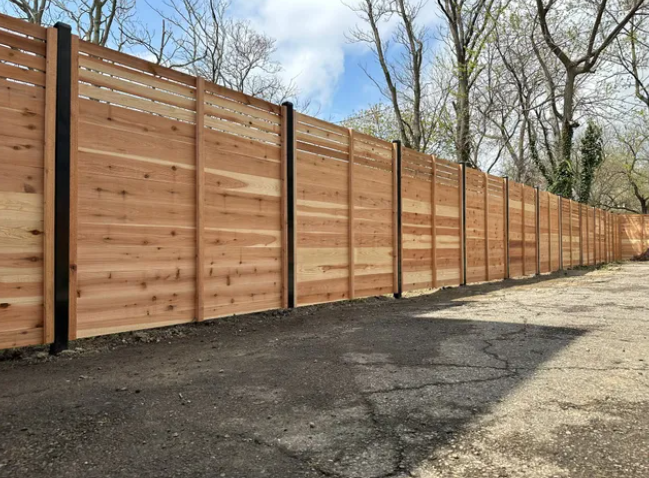
Wood fencing remains popular in Buffalo for its natural beauty and classic appeal. While it requires more maintenance than vinyl or aluminum, cedar wood can perform well in our winters with proper care.
Choosing the Right Wood for Buffalo
Not all wood is created equal. For Buffalo’s climate, we recommend:
- Western Red Cedar: Our top choice. Natural oils resist rot, insects, and moisture. Weathers to a beautiful silver-gray if left unstained.
- White Cedar: Similar properties to red cedar, often more affordable in our region.
- Pressure-Treated Pine: Budget-friendly option, but requires more frequent sealing and may warp over time.
Wood Fence Winter Challenges
- Absorbs moisture, which can lead to warping and cracking during freeze-thaw cycles
- Requires sealing or staining every 2-3 years for protection
- Can rot at ground level if not properly installed
- Heavy snow accumulation can bow or break panels
- Posts may shift due to frost heave if not set deep enough
Wood Fence Winter Care Tips
- Apply water-repellent sealer before winter arrives
- Clear snow accumulation from the base of the fence
- Ensure posts are set at least 36-42 inches deep (below the frost line)
- Inspect for loose boards and tighten hardware in the fall
- Consider leaving small gaps between boards to reduce wind pressure
Best for: Homeowners who love the natural look and do not mind regular maintenance, privacy fences, and traditional home styles
#5: Wrought Iron Fencing – Timeless but High-Maintenance
Wrought iron fencing offers unmatched elegance and security, but Buffalo winters demand extra attention to prevent rust and corrosion.
Iron Fence Winter Challenges
- Rust: Iron’s biggest enemy. Salt, moisture, and scratches in the finish lead to rust.
- Maintenance required: Needs regular inspection, touch-up painting, and rust treatment.
- Expense: Both initial cost and maintenance costs are higher than those of other options.
Making Iron Work in Buffalo
- Choose iron with a galvanized base coat under the paint
- Inspect for rust spots each spring and fall
- Touch up scratches and chips immediately to prevent rust spread
- Apply rust-inhibiting primer before repainting
- Rinse off road salt deposits after winter storms
Best for: Historic homes, high-security applications, homeowners willing to invest in maintenance, front yard accents
Winter-Proof Fence Installation Tips
Regardless of which material you choose, proper installation is critical for winter performance. Here is what matters most in Buffalo:
- Deep post holes: Posts should be set 36-42 inches deep, below Buffalo’s frost line, to prevent heaving
- Concrete footings: Proper concrete bases anchor posts securely against wind and ground movement
- Gravel drainage: Adding gravel at the bottom of post holes improves drainage and reduces frost heave
- Leave ground clearance: Keeping the fence bottom 2-3 inches above ground prevents rot and allows snow to blow under
- Use quality hardware: Stainless steel or galvanized fasteners resist rust and corrosion
Quality Fencing: Buffalo’s Winter Fence Experts
We install fences built to handle Buffalo’s toughest winters – guaranteed!
📞 Call Now: (716) 309-5471
👉 Schedule Your Free Consultation
Frequently Asked Questions
1. Can vinyl fencing crack in extreme cold?
High-quality vinyl fencing is engineered to remain flexible even in sub-zero temperatures. Cheaper vinyl products may become brittle, which is why we only use premium, cold-weather-rated vinyl. Avoid hitting your vinyl fence with hard objects (like a metal snow shovel) in extreme cold to prevent potential cracking.
2. How deep should fence posts be in Buffalo?
In Buffalo, NY, fence posts should be set at least 36-42 inches deep to get below the frost line. This prevents frost heave from shifting your posts during freeze-thaw cycles. Quality Fencing always sets posts to the proper depth for our climate.
3. Should I remove snow from my fence?
For most fences, light snow accumulation is not a concern. However, heavy, wet snow (common in Buffalo lake-effect storms) should be gently removed from solid fence panels to prevent bowing or damage. Use a broom or plastic shovel – never a metal shovel that could damage the fence.
4. What fence material lasts longest in Buffalo?
Vinyl and aluminum fences typically last the longest in Buffalo – 25-30+ years with minimal maintenance. Wrought iron can last even longer (50+ years) but requires regular maintenance to prevent rust. Cedar wood fences last 15-20 years with proper care. Chain link lasts 20+ years.
5. Can I install a fence in winter in Buffalo?
Winter fence installation in Buffalo is challenging due to frozen ground. While it is technically possible with specialized equipment, we recommend scheduling your installation for spring (April-May) or fall (September-October) for the best results and pricing. Contact us in winter to plan and schedule your spring installation.
6. Does road salt damage fences?
Road salt can damage certain fence materials. Iron and steel (including some chain link) are vulnerable to salt-accelerated corrosion. Wood can be damaged by salt spray. Vinyl and aluminum are salt-resistant and ideal for properties near roads. If you have an iron or wood fence near a road, rinse it with fresh water in spring to remove salt residue.
Choose a Fence That Can Handle Buffalo Winters
Buffalo’s winters are legendary – and your fence needs to be tough enough to handle them. While vinyl fencing is our top recommendation for most homeowners, the best choice depends on your specific needs, budget, and aesthetic preferences.
At Quality Fencing, we have been helping homeowners throughout Amherst, Williamsville, Cheektowaga, Orchard Park, Hamburg, and all of Western New York choose and install fences that stand up to our brutal winters.
Ready to invest in a winter-tough fence? Contact us today for a free consultation. We will assess your property, discuss your goals, and recommend the perfect fence material for your Buffalo home.
🏆 Get Your FREE Fence Estimate Today!
Buffalo’s trusted fence experts for over 10 years!
📞 CALL NOW: (716) 309-5471
📍 658 Hopkins Road, Williamsville, NY 14221
📧 sales@qualityfencingbuffalo.com